
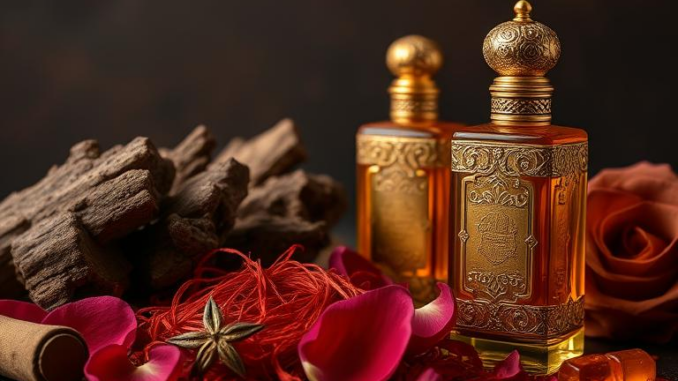
Fragrance is one of humanity’s oldest art forms. Long before the modern perfume industry developed its complex chemistry and mass production methods, the cultures of the Middle East were crafting fragrances of extraordinary depth and sophistication from some of the rarest and most precious materials on earth.
This tradition continues today, offering fragrance lovers a connection to an unbroken heritage of scent that modern commercial perfumery rarely approaches.
The Unique Character of Middle Eastern Perfume Oils
The defining characteristics of middle eastern perfume oils are their concentration, complexity, and longevity. Unlike alcohol-based fragrances that disperse quickly into the air, oil-based perfumes are applied directly to the skin, where they interact with individual body chemistry and develop uniquely on each wearer.
The ingredients at the heart of Middle Eastern perfumery are among the most extraordinary in the natural world. Oud, derived from the resinous heartwood of the agarwood tree, is arguably the most prized and expensive natural fragrance ingredient on earth. Rose, amber, musk, sandalwood, and various resins and spices round out the palate of ingredients that give these fragrances their characteristic richness and warmth.
Cultural Significance and Personal Expression
In many Middle Eastern cultures, fragrance is far more than a cosmetic product. It is a form of personal expression, hospitality, and spiritual practice with deep roots in daily life. Wearing a fine oud or musk fragrance is considered an act of grooming as fundamental as dressing well.
Welcoming guests with incense burning or offering fine perfume is an expression of respect and generosity that has been practiced for centuries. For those outside these cultures, discovering Middle Eastern perfumery offers a window into a world that is genuinely different from anything produced by the mainstream fragrance industry.
Choosing and Wearing Perfume Oils
Exploring Middle Eastern perfume oils is best approached with patience and an open mind. These fragrances often smell very different on paper or from the bottle than they do on warm skin. Trying a small amount on the wrist and allowing it to develop over several hours before forming a judgment is the recommended approach.
Personal resonance is the ultimate guide, as fragrance is an intensely subjective experience. Quality oil perfumes are available in various concentrations and formats, from pure concentrated attars to oil blends that incorporate synthetic components to improve stability and value.
How Modern Perfumers Blend Tradition and Innovation
Today, many modern perfumers are finding new ways to combine ancient Middle Eastern perfume traditions with contemporary fragrance design. They still use classic ingredients like oud, rose, amber, and sandalwood, but they often mix them with lighter modern notes such as citrus, soft florals, or clean musks.
This creates perfumes that feel both traditional and modern at the same time, making them more appealing to a wider range of people around the world. By respecting old traditions while exploring new ideas, modern perfumers keep the art of Middle Eastern perfumery alive and relevant in today’s fast-changing world.
Conclusion
Middle Eastern perfume oils represent a fragrance tradition of extraordinary richness that offers something genuinely rare in today’s world: a sensory experience with deep cultural roots, exceptional quality ingredients, and a complexity that rewards continued exploration.
Whether you are new to fragrance or a seasoned enthusiast, engaging with this tradition introduces a dimension of personal care and artistic appreciation that enriches everyday life in ways that few other pleasures can match.