

Ecommerce photography is vital to online shopping since customers aren’t able to touch or inspect products before adding them to their cart. The high quality of product images contributes to shoppers’ understanding of what they are buying and to making informed buying decisions. From clothing to electronics, cosmetics to furniture, accessories to everything in between, professional product photography can enhance your online store’s appeal and credibility.
Good product images also have a positive effect on a business’s brand-building process, along with the engagement of its customers and boosting their sales chances. Even small businesses can have professional-looking product photos by using the right equipment, correct lighting and background, and the right photography techniques.
Today, we will discuss the basics of ecommerce photography, the necessary gear, and how to compose compelling product photos that will maximize sales for your online business.
What Is Ecommerce Photography?
Ecommerce photography involves taking great product pictures for ecommerce stores, ecommerce platforms, and digital ads. The photos aid the consumer in getting an idea of what the product will look like, feel like, and be like.
Ecommerce product photography is different from regular photography, as it is meant to communicate products in a clear, professional manner. The primary aim is to present products in an appealing way and to give the right information.
For instance, an online clothing retailer might showcase images of the fabric’s quality, design, and how it fits on the person in the front, back, and side views.
Commonly used for:
- Online shopping websites
- Amazon and other marketplaces.
- Social media stores
- Product catalogs
- Digital advertisements
- Brand websites
How is Ecommerce Photography Crucial for Web-Based Businesses?

The first thing customers are likely to see when they visit an online store is product images. The allure of beautiful photos can help attract visitors and make them want to look around for more products.
Let’s talk about some of the essential advantages of e-commerce photography.
1. Builds Customer Trust
When it comes to your customers, they want to know what they are buying. With clear and straightforward product images, they can visualize the product before they order.
Professional photographs from multiple angles can make people more sure that they will buy the item they are viewing on the online store.
2. Improves Product Presentation
Quality images help the products appear appealing and help them stand out. Web stores can look better if lighting, backgrounds, and details are sharp and clean.
3. Increases Sales Opportunities
Quality product photos can lure customers to spend more time looking at products. If a consumer is aware of what a product has to offer, he may feel more at ease with making the purchase.
4. Reduces Product Returns
Product photography is crucial for the customer to know about product colors, sizes, materials, and design. It is good to be realistic in details to minimize the misunderstandings and minimize the returns, which may occur if there are incorrect expectations.
What Equipment Do You Need for Ecommerce Photography?

It’s not always necessary to use expensive equipment to produce professional product images. A simple photo setup can make great photos when done properly.
1. Digital Camera
Detailed product photos can be taken with a DSLR or mirrorless camera. Such cameras provide greater focus, exposure, and image quality control.
But for small businesses and small-timers, a modern smartphone equipped with a decent camera can do a fine job as well.
2. Tripod
Using a tripod provides stability in shooting and consistent camera angles. It’s especially helpful in cases of many products being shot for a web catalog.
3. Lighting Equipment
Lighting is one of the essential elements of product photography. Use softboxes, LED lights, and ring lights to minimise unwanted shadows and to create balanced lighting.
4. Photography Background
A clean background draws customers’ attention to the product. Online marketplaces tend to feature white backgrounds, and lifestyle backgrounds can be used to illustrate the appearance of products in actual scenarios.
5. Editing Software
Photo editing tools are used to enhance the brightness, contrast, sharpness, and color balance. Adobe Photoshop and Lightroom are some software tools that can assist the photographers for creating product images that are polished.
How to Create Professional Ecommerce Product Images?
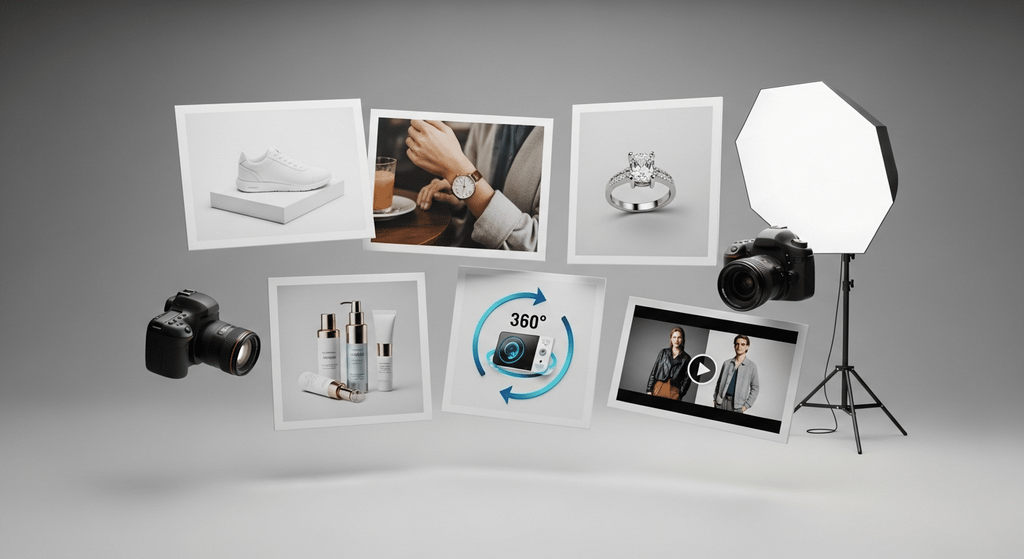
If you’re making professional product photos, you need to plan and pay attention to the details. Here are some tips to help you get better photos.
1. Prepare Your Products
Wipe products before taking photos of them; remove dust, fingerprints, and unwanted marks. Ensure clothing is organised and the presentation is clean and tidy.
The well-prepared product makes a good impression in pictures.
2. Choose the Right Lighting
Illuminating the products evenly with natural light or lighting equipment. Try to avoid harsh lighting, as this can produce strong shadows and obscure key details.
Soft lighting is particularly effective for product photography like cosmetics, electronics, jewelry, and so on.
3. Working with a Suitable Background
Select a background that fits with your product and branding. Standard product listings are best suited to white or neutral backgrounds.
Use backgrounds for lifestyle photography that depict how customers would use the product in everyday situations.
4. Capture Multiple Angles
Take several photos from varied angles to give a rounded look of the product.
Consider capturing:
- Front and back views
- Side angles
- Close-up details
- Product packaging
- Lifestyle photographs
Customers can get more clarity around product features through multiple images.
5. Maintain Consistency
Standardize lighting, backgrounds, camera setups, and image sizes in your product catalog.
Regular photos keep your website ecommerce arranged and expert.
6. Add Your Product Information
Take photographs and adjust brightness, contrast, cropping, and sharpness as needed.
Don’t over-edit and alter the true appearance of the product from the actual image. The customer should be presented with the product they have seen online.
What Are the Different Types of Ecommerce Photography?
There are various photography styles for various uses. The selection of the appropriate style is determined by the product and audience.
1. White Background Photography

This style features items placed on a white background. It’s a potent way to keep focus on the product and is popular among online marketplaces.
2. Lifestyle Photography

Lifestyle photography is used to depict products in a real-life setting. It aids customers in visualizing how products can be incorporated into their lives.
3. 360-Degree Product Photography

This method can record the product from multiple angles, enabling customers to rotate a product and see it from various perspectives.
4. Close-Up Photography

Close-up photography brings out the finer details of the product, like the stitching, material quality, product finishes, and texture of the fabric.
Ecommerce Photography: Take Great Pictures
Some basic principles of photography can help you enhance the quality of your product catalogue online.
- Utilize high-resolution images showing product details.
- Stick as close to the colors of products as possible.
- Leave nothing in product photos that isn’t a necessary element.
- Keep images the same size when listing products.
- Reduce the file size of images for faster website loading.
- Use a variety of product angles as needed.
- Create descriptive image file names and alternative text for SEO.
- Test product images on a cell phone.
These practices will make your ecommerce website more visually appealing and will also make the shopping experience better.
Why is Ecommerce Photography an SEO Advantage?
Ecommerce photography can also help with the optimization of search engines. While search engines don’t read every detail of an image as humans do, it’s essential to optimize images.
Give images descriptive file names that convey the information in the image. For instance, rather than uploading an image called ” use a descriptive image name.
Include appropriate alternate text (alt text) in product images for search engines and screen readers. Another advantage of compressing images is that it speeds up the load time of your website.
Combined with product photography, image optimization can enhance the visibility of online stores in image search results and can improve the user experience.
Conclusion
The art of ecommerce photography is a crucial aspect of creating a thriving online business. Businesses can use professional product images to clearly showcase their products, foster customer trust, and enhance their shopping experience.
No need to invest in a fancy photography studio. Product photos displayed in an attractive way can be created using a good camera or a smartphone, proper lighting, a clean background, and basic editing tools.
With various photography styles, multiple angles, and image optimization techniques, businesses can create more professional, appealing online catalogs. Quality e-commerce photography can play a supporting role in long-term brand growth and enhance the shopping experience.
Frequently Asked Questions (FAQ’s)
1. What is Ecommerce Photography?
Ecommerce photography involves taking photos of products for online stores, ecommerce marketplaces, and digital platforms. It helps customers to make an informed decision about whether to buy a product before they buy it based on its appearance, features and quality.
2. Which Background Is Best for Ecommerce Photography?
White background is the preferred color of the background for standard product listings as it draws attention to the product. Lifestyle backgrounds are helpful in presenting products in real-life contexts.
3. How can ecommerce photography boost sales?
Professional product images help customers to have a better understanding of products, establish trust, and make their purchase decisions. Catching the eye with a compelling image and ensuring it’s accurate can help boost product interaction and sales chances.